
When Chili Plants Start to Wilt: Learning About Fusarium Wilt with Farmers in Wanasuka Village

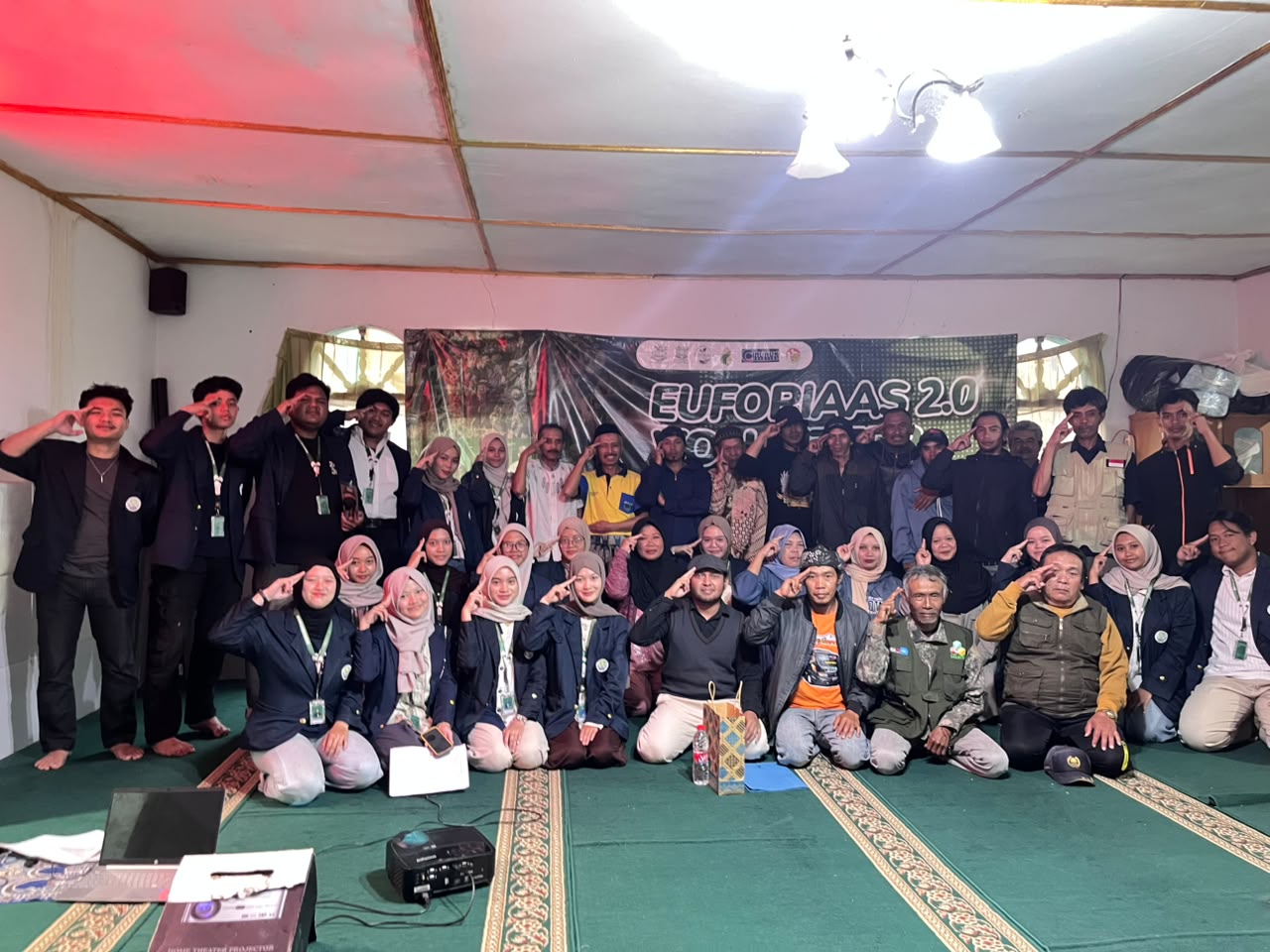
By Haifa Azzahra Sasmita & Muhamad Dhafin Keanu Aflah Kilifatano
IAAS LC UIN Sunan Gunung Djati Bandung
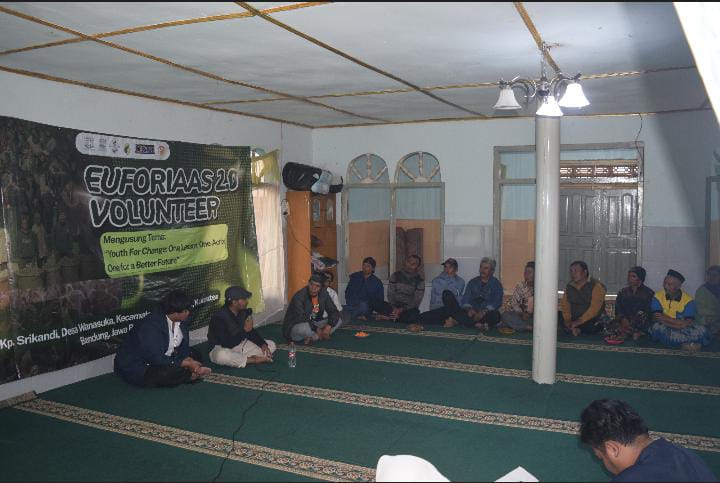
A session on Fusarium wilt was delivered to farmers in Wanasuka Village.
A chili plant starts to look different.
Its leaves begin to turn yellow. Its growth is slower than the plants around it. Then, little by little, it starts to wilt.
For farmers, this may be a familiar sight. But one question remains: what is actually causing the plant to wilt?
It could be Fusarium wilt. It could also be another disease or an environmental problem. This is why recognizing the symptoms is only the beginning.
This was one of the issues discussed when IAAS LC UIN Sunan Gunung Djati Bandung visited Srikandi Hamlet, Wanasuka Village, Pangalengan District, Bandung Regency, as part of a community-based educational activity for chili farmers.
Rather than simply introducing the name of a disease, the activity encouraged farmers to take a closer look at what happens to a plant before deciding how to manage it.
So, What Is Fusarium Wilt?
Fusarium wilt is a disease associated with soil-borne pathogens, particularly Fusarium oxysporum. Unlike problems that can be easily seen on the surface of a plant, the infection can start from the roots and develop inside the plant’s vascular system.
The pathogen can survive in soil through structures called chlamydospores. These structures allow it to persist for relatively long periods. So, even when a diseased plant has been removed, the problem may not necessarily be gone.
Once the pathogen enters through the roots, it can colonize the xylem and interfere with water transportation. This is one reason infected plants can gradually become yellow, stunted, and wilted.
That is also why a wilted plant deserves more attention than simply asking, “Why is this plant thirsty?”
Look at the Whole Plant
During the activity, farmers were introduced to some of the signs that can help them make an initial assessment.
The first signs may include reduced plant vigor, yellowing leaves, slower growth, and wilting. In severe cases, the plant may eventually die.
But there is another part of the plant worth checking: the stem.
When the stem is cut transversely, brownish discoloration of the vascular tissue may be observed in plants affected by vascular wilt.
The roots can also provide useful information.
This is important because the leaves only show us part of the story. Fusarium wilt is closely associated with the root and vascular system, so observing these parts can help farmers understand what may be happening inside the plant.
However, there is one thing to keep in mind:
A wilted plant is not automatically a Fusarium-infected plant.
Other pathogens and environmental problems can cause similar symptoms. Different Fusarium species can also be associated with wilt diseases in chili. Therefore, observations in the field are useful for early assessment, but they are not enough to definitively identify the pathogen.
When confirmation is needed, laboratory methods such as pathogen isolation, pathogenicity testing, morphological characterization, or molecular identification can provide more reliable identification.
The Problem May Stay in the Soil
One reason Fusarium wilt can become difficult to manage is that the problem does not always end when the crop is removed.
If infected plant residues or contaminated soil remain in the field, they can become sources of inoculum for the next crop. The pathogen can also persist in the soil through chlamydospores.
This means that farmers need to think beyond the individual plant.
Where did the plant grow?
What happened to the previous crop?
Are there infected residues left in the field?
Could soil from an infected area be moved somewhere else?
These questions are part of understanding how the disease can develop and spread.
The environment also plays a role. Growing media and soil microbial communities can influence both plant growth and Fusarium wilt development. Some soils can even show a degree of suppressiveness, where certain microorganisms help limit the development of the pathogen.
So, when talking about Fusarium wilt, we are not only talking about a pathogen. We are also talking about the condition of the soil where the plant grows.
What Can Farmers Do?
There is no single practice that can be expected to solve every Fusarium wilt problem.
Instead, management can combine several approaches, including the use of healthy planting materials, field sanitation, proper management of infected plant residues, reduction of inoculum sources, improvement of root-zone conditions, and maintenance of healthy soil conditions.
Biological control can also be considered as part of the strategy.
One example is Gliocladium sp., which has been reported for its potential to suppress Fusarium wilt in chili plants. However, its effectiveness can vary depending on environmental conditions, soil conditions, the biological agent used, pathogen population, host plant, and application method.
In other words, biological control is not a “one treatment fixes everything” solution. It works best when considered together with other management practices.
From the Classroom to the Field
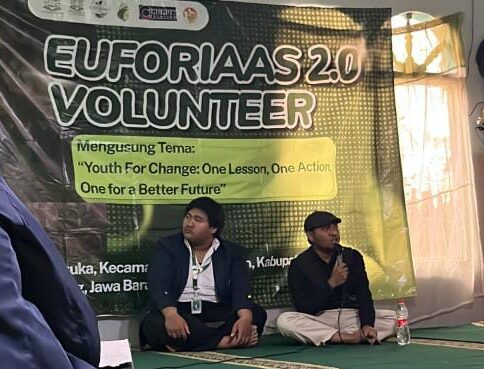
Mr. Efrin is explaining Fusarium wilt to the audience.
This is where farmer education becomes important.
The activity in Wanasuka Village was carried out through three main stages: preparation, education and discussion, and evaluation and follow-up.
Before the activity, the team conducted administrative coordination and a field survey to understand the local situation and identify issues related to chili cultivation.
The main session was then carried out through a Focus Group Discussion (FGD). Farmers were introduced to Fusarium wilt, its symptoms, possible causes, disease development, prevention, and management.
But the discussion was not meant to be a one-way transfer of information.
Farmers also had the opportunity to share what they had seen and experienced in their own fields. This made the discussion more closely connected to the conditions they actually face.
A post-test was also conducted to see how well the material was understood, followed by planned monitoring to see how the knowledge could be applied after the activity.
Maybe the First Step Is Simply to Look More Closely
Plant disease management does not always begin with a treatment.
Sometimes, it begins with a better question.
Instead of immediately asking what should be applied to a wilted chili plant, farmers can first look at the symptoms, examine the roots and stem, observe how the problem is distributed in the field, and consider the history of the land.
From there, they can begin to think about possible causes and appropriate management.
Observe. Examine. Understand. Then act.
It sounds simple, but careful observation can make a difference in how a problem is approached.
More Than Just a Discussion About Fusarium
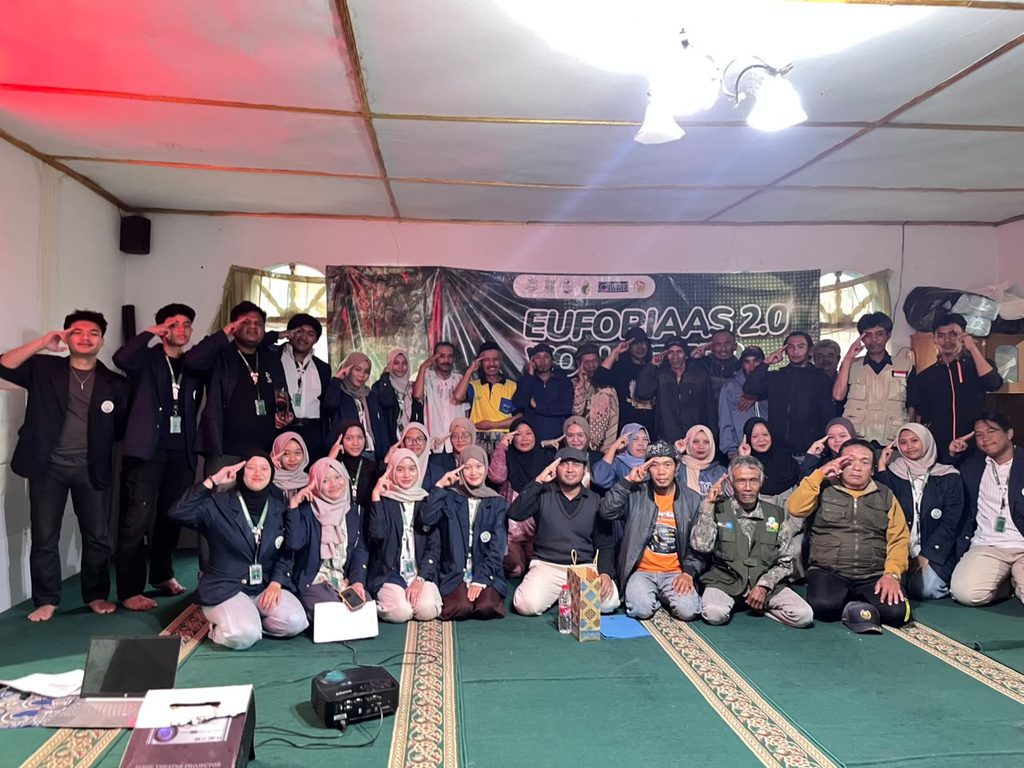
Documentation session with farmers in Wanasuka Village.
For IAAS LC UIN Sunan Gunung Djati Bandung, the activity in Wanasuka Village was not only about introducing Fusarium wilt.
It was also about connecting agricultural knowledge with the people who work with plants every day.
Farmers already have their own experiences and observations from the field. Scientific knowledge can help add another perspective, while discussions with farmers can help make that knowledge more relevant to actual conditions.
That connection is important in building more sustainable agricultural practices.
Healthy crops depend not only on the plants themselves, but also on healthy soil, suitable environmental conditions, responsible cultivation practices, and the knowledge of the people managing them.
A discussion about one plant disease may seem like a small activity.
But perhaps it can start with something as simple as helping someone look at a wilted chili plant and ask:
“What is really happening here?”
And from that question, better decisions can begin.
Acknowledgement
We would like to express our gratitude to all parties who supported this activity. Special appreciation goes to the community representatives of Srikandi Hamlet, Wanasuka Village, Pangalengan District, Bandung Regency, for providing permission and supporting the implementation of the educational activity.
We also extend our appreciation to IAAS LC UIN Sunan Gunung Djati Bandung for organizing and supporting the program.